Since April 2017, every business in England with a water meter has had the legal right to switch water retailer. Despite that, the vast majority of businesses have never compared the market — and many are paying significantly more than they need to.
This guide explains who can switch, what switching involves, what to look for in a new supplier, and how to avoid the mistakes that catch businesses out.
Can Your Business Switch Water Supplier?
The business water market was deregulated in England in April 2017, following Scotland's earlier deregulation in 2008. If your business is in England or Scotland and you have a business water meter, you can almost certainly switch.
You are eligible to switch if:
- Your premises are in England or Scotland
- Water is supplied through a business meter (not included in rent or business rates)
- The water account is in your business name
You cannot switch if:
- Your premises are in Wales or Northern Ireland — those markets remain regulated
- Water is billed through your landlord or included in a service charge
- You are a domestic customer (the deregulated market is businesses only)
Tenants can switch provided the water account is in the business name and your lease doesn't restrict it. If you're unsure, check your lease or ask your landlord — in most cases it isn't an issue.
How Much Could You Save?
Savings vary depending on your current retailer, your consumption, and the size and type of your premises. Businesses that have never switched — particularly those still on the default rates inherited from their regional water company — often find the most room for improvement.
What switching can deliver:
- Lower unit rates — the per-cubic-metre rate you pay for water and wastewater can vary considerably between retailers
- Reduced standing charges — some retailers offer lower fixed charges for smaller businesses
- Better billing — consolidated invoices if you have multiple sites, clearer data, and fewer billing errors
- Improved service — faster response times, a dedicated account manager, and online account access
Water bills are generally lower than energy bills, so the absolute pound savings tend to be modest for smaller businesses. That said, for businesses with high water consumption — hospitality, care homes, laundries, food production — the savings can be substantial.
Step-by-Step: How to Switch Business Water Supplier
The switching process is straightforward once you know the steps.
Step 1: Gather your current details
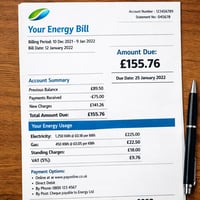
You'll need your current water retailer's name, your SPID (Supplier Point Identifier — a unique reference on your bill), and your most recent bills or consumption data. If you can't find your SPID, your current retailer can provide it.
Step 2: Compare the market
Contact multiple retailers directly or use a broker who can access the whole market on your behalf. Make sure you're comparing like for like — unit rates, standing charges, contract length, and any exit fees or auto-renewal terms.
Step 3: Choose a retailer and sign a contract
Once you've selected a supplier, you'll sign a contract specifying your rates, contract length, and terms. Read it carefully — pay attention to notice periods for renewal and any exit fees that apply if you leave early.
Step 4: Your new retailer handles the switch
You don't need to contact your old retailer. Your new retailer notifies the market operator (MOSL in England) and coordinates the transfer. The process takes 28 days from contract signature.
Step 5: Confirm your final bill from your old retailer
You'll receive a final bill from your old retailer covering the period up to the switch date. Check it for accuracy — if anything looks wrong, raise it promptly.
What to Look For in a Business Water Retailer
Price matters, but it isn't the only thing to consider when choosing a retailer.
Rates and charges: Compare the total cost — unit rate plus standing charge — across your expected annual consumption. A lower unit rate doesn't always mean a lower bill if the standing charge is high.
Contract terms: Short contracts give flexibility; longer contracts can lock in a good rate. Watch for auto-renewal clauses that roll you into another term without notice, and check the notice period you need to give to leave.
Customer service: Water billing can throw up queries — meter readings, estimated bills, sudden consumption spikes. Check whether the retailer has a dedicated business support team and what their typical response times are.
Billing and account management: Online portals, consolidated billing across sites, and smart meter compatibility are increasingly offered by the better retailers. If you manage multiple sites, this can save significant admin time.
Leak and consumption alerts: Some retailers offer automated alerts if your consumption pattern suggests a leak. This can be genuinely valuable — a slow leak left undetected can run up a large bill.
Common Mistakes to Avoid
Not checking your contract end date. Many business water contracts auto-renew. If you don't serve notice within the specified window — often 30 to 90 days before renewal — you can find yourself locked in for another year. Set a reminder when you sign.
Only looking at the unit rate. The unit rate is one line on your bill. Standing charges, wastewater rates, and any ancillary charges all affect the total. Always ask for a full tariff comparison.
Assuming switching is complicated. It isn't. The process is managed by your new retailer and the market operator. You don't need to do much more than sign the contract and hand over your SPID.
Not reviewing at renewal. Even if you're happy with your current retailer, it's worth comparing at renewal. The market changes, new retailers enter, and your own consumption may have shifted since you last reviewed.
Ignoring your water usage data. Your bills contain consumption data that most businesses never look at. Unusual spikes can indicate leaks or inefficiencies that are costing you money regardless of which retailer you're with.
Sector-Specific Advice
Pubs and hospitality venues
Water is a significant operational cost for pubs, restaurants, and hotels. If you're on a lease, check whether your landlord or pub company has a preferred supplier arrangement — this sometimes restricts your ability to switch, but it's worth verifying rather than assuming.
Care homes
Care homes use large volumes of water for laundry, bathing, and catering. Many operators have multiple sites, which creates an opportunity to negotiate multi-site rates and simplify billing across the portfolio.
Retail and hospitality chains
Multi-site operators often have different retailers across their estate. Consolidating onto a single retailer with consistent billing simplifies finance operations and often achieves better commercial terms than individual site deals.
Manufacturing and industrial
High-consumption industrial sites can achieve significant savings through switching. Some manufacturers also qualify for reduced wastewater charges if they can demonstrate that a portion of their water consumption doesn't return to the sewer.
How a Water Broker Can Help
You can switch water supplier directly, but working through a broker offers some advantages — particularly for multi-site businesses or those with limited time to manage procurement.
A good broker will:
- Access the whole market, not just a panel of preferred suppliers
- Compare tariffs on a like-for-like basis across your actual consumption
- Handle the switching process end-to-end
- Monitor your contract and prompt you to review ahead of renewal
- Manage any billing queries or disputes with your retailer on your behalf
At The Utilities Group, we work with businesses across the UK to compare the business water market and handle the switch from start to finish. We also look at water alongside your energy contracts — which means you're not managing multiple broker relationships for different utilities. Get in touch to find out what the market currently offers for your premises.
Frequently Asked Questions
Can I switch business water supplier if I'm a tenant?
It depends on your lease. If water is billed directly to you by the retailer — meaning the water account is in your business name — you can switch. If water is included in your rent or recharged through your landlord, you may need your landlord's agreement.
Will switching affect my water supply?
No. Switching retailer has no effect on the physical supply of water to your premises. The pipes, the pressure, and the water quality are all managed by the regional wholesaler and don't change when you switch retailer.
How long does it take to switch business water supplier?
The standard switching timeline is 28 days from your contract being signed. End-to-end, from starting to compare the market to being fully switched, is usually 4–6 weeks.
What if I have multiple business premises?
You can switch each premises separately, but it's usually more efficient to arrange all of them at once. Some retailers offer better rates for multi-site customers, and a broker can manage a multi-site switch as a single process.
Can I switch back if I'm unhappy with my new water retailer?
Yes. Once your contract expires, or during any break clause written into your agreement, you can switch to a different retailer. If there is a serious failure of service, you can raise a formal complaint with Ofwat.